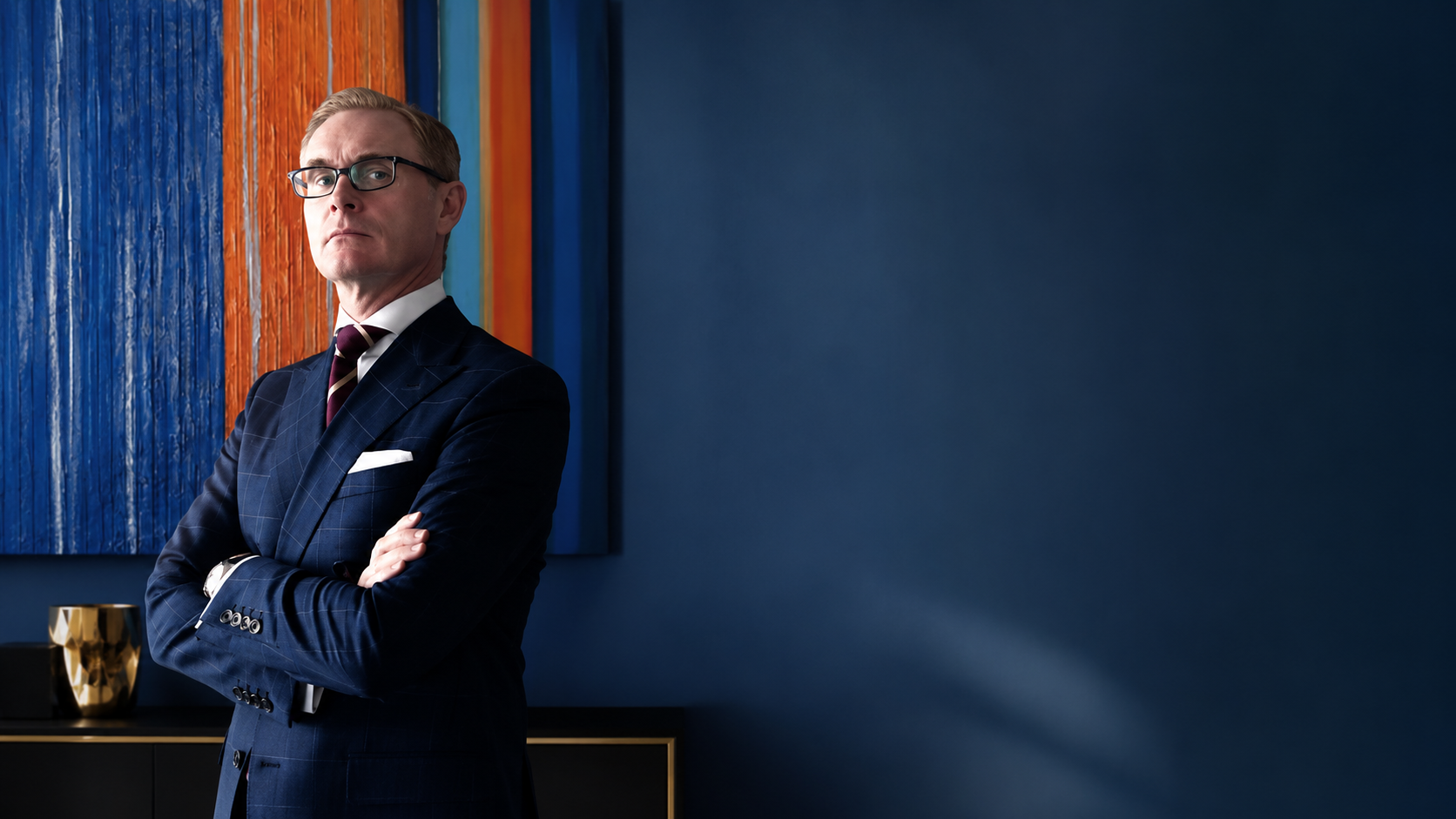
I've sold and built billions. I'll help you achieve your goals.
My name is William O'Dwyer — starting with nothing, I built a multi-billion-dollar property empire, residential, commercial and resorts. Along the way I created and led one of the best sales teams in Australia. I provided exceptional training, support and a constant supply of qualified leads.
You choose what I can do for you
- •Create a constant supply of quality, qualified leads
- •Introduce new strategies that will turbo charge sales
- •Provide a masterclass on prospecting, presenting & closing
From stunning penthouses I built myself, beautiful yachts — to a tiny rat-infested prison cell - surrounded by violent criminals. I've lived the extremes of achieving big and losing everything. Now I'll help you and your team to win and avoid losing. As only a person who has done both truly can.
Nothing prepares you for it. Nothing.
Prison is an alien, dangerous place, full of violent men who have committed horrific crimes. Hard drugs are rampant — they run through the place like a second bloodstream. My first night, I was locked in a filthy cell with an inmate who was obviously high on drugs and out of control. He didn't sleep. He paced, screamed, and kicked the cell door until the sun came up. I'm not ashamed to admit it: I was scared, cowering there on the top bunk, wondering how a person ends up here.
To answer that, you have to go back to the beginning. Not to the collapse. Not to the courtroom. Further back than that.
The Arrival — 1990
No money. No connections. No fallback. No Plan B. Just a suitcase, a hunger that only comes from having nothing to lose, and a wife who believed in me before there was anything to believe in.
We set up our first Australian home in a caravan park in a Western Sydney suburb called Prospect. Maybe the name was an omen. I took a job with a property marketing company.
My first day was an introduction to a bloodbath — the kind of company that throws as many young hopefuls as it can into the field and watches who survives. No wage. Commission only. A long room of desks, no air-conditioning — just the heat and a dozen voices on the phones at once. It had the feel of a meat factory, not an office.
The sales manager who ran the floor had seen a thousand of us come and go. Sneering, battle-weary, he didn't so much walk the floor as patrol it — the way a sergeant sends the next wave over the top, already knowing most of them won't make it back. On my first day he handed me a phone and told me to call until my throat hurt, and book as many face-to-face appointments as I could for the "real sales blokes." So I did. I could see the other new hopefuls around me dropping like flies, unable to handle the rejection — and behind them, more eager young hopefuls standing in the background, waiting for their chance. I remember thinking: more meat for the grinder. I persisted, convinced that every rejection got me closer to a yes. It was book an appointment or don't eat. Eventually, after a few hours, I booked an appointment. Then another. Then another. It went on like that for days. I was on fire.
The owner had a habit of napping in the office during the day, but he must have had one ear listening, because one day he slowly stretched, got up. People stared as he walked toward me. He stopped, looked me up and down. I thought I was gone. Then a tiny grin appeared, and he turned to the sneering manager and said, "Give this bloke some face-to-face appointments. I think he's got something." The next evening, there I was, face to face with prospects. I got the sale. Driving home that night in my old, clapped-out 1975 Celica, I literally howled out loud, swerving down the road, delirious with happiness.
I'm hopeless with my hands — always have been. But I'd been given something else instead: an ability to connect with people. To listen. Properly listen. Most people think a conversation is two people taking turns to talk. I'd noticed, even as a kid, that we're built with one mouth and two ears, and almost everyone uses them backwards. They talk. Nobody's actually listening to what the other person is saying or needs.
I never understood the old line about a fast-talking salesperson who could sell ice to Eskimos. In my experience it was the opposite: the less I said, the more the sale closed itself.
Face-to-face with a couple, I developed a technique. I took the prospects on a mental journey: "Imagine, here we are, years from now — you didn't buy that investment property. What does life look like?" Then I'd say nothing. Let them sit with it. "Now imagine you did buy it, all those years ago. Is it worth more today? Is life better, having it?" I never argued the numbers — every Australian already believes in their bones that property goes up in value. Trying to convince them of it was a waste of breath.
What they actually wanted was a comfortable future. The property was just the vehicle that got them there. The bricks were just the receipt. The product was never the point. The future was the product. So I stopped selling bricks and mortar, and started selling future prosperity. I simply said the things that enabled people to arrive at their own answer — which was usually to buy, no pitch, no pressure, just the truth, but their truth, told to them by themselves.
I just didn't argue with prospects. I listened. I realised that everything a salesperson tells someone could be a lie, but everything someone tells themselves is the truth. So my philosophy was simple: the best person to close the sale for you was the person you were trying to sell to. Sounds simple, but most people selling anything — or trying to persuade another person of anything — don't grasp that one truth. And none of this was really about property. Swap the product for anything you like — a car, a service, a t-shirt, yourself in a job interview — and the principle doesn't move an inch. Salespeople don't really close sales. The genius ones simply create the environment for prospects to close themselves. Master this technique and you will become a genius salesperson.
I chased that instinct wherever and whenever it took me, seven days a week — including a seven-hour drive to Griffith, in rural NSW, for a single prospect, with my wife in the passenger seat, along for the trip. I didn't get the sale. We stayed the night in a roadside motel so downmarket the carpet had been run up the walls as wallpaper. Lying there, with the musty smell invading my nostrils, I remember smiling — not because the day had gone well, but because I finally knew, without doubt, that I'd found the one thing I was built for, and I was prepared to do whatever it took to ride it all the way up. I was hooked.
My sales broke every record in the company. Before long I was selling more myself than the combined team. Within six months I was asked to become national sales manager. I didn't want the job — I knew it would slow me down — but I took it anyway. It hadn't come from having more knowledge about property, charm, or some gift for pressure. It came from listening harder than anyone else in the room and implementing the presentation I had perfected.
One evening I was having a drink with the day-napping owner of the company — I remember sipping a cold light beer — when he looked at me and said, "William, you're like a lion in a cage. Pacing, prowling. I won't be able to contain you much longer." He was right.
So I went out on my own.
The Rise
What followed wasn't gradual. It was relentless. Driven by unbridled ambition.
Within a few years, I'd built Ralan into one of the most successful project marketing companies in Australia — selling developments off the plan, enabling developers to secure their funding. We were in constant demand. We never failed.
Then I stopped marketing other people's buildings and started building my own: apartment towers, commercial property, resorts. Entire slices of skyline. What made my company unique was that the very sales machine I'd built marketing for other developers now worked exclusively for me. No one else's properties. Just mine. My main business was always in Sydney — but at one point I was building new hotel resorts in Queensland, already owned a successful resort, owned two full city blocks, and held an option on a third city block. At one stage the press said I owned more South East Queensland property than any other developer. This was all in addition to my Sydney projects.
At any given time, I was fighting on several fronts: local councils, state rail authorities, and construction unions. At one point the construction unions blockaded all of my sites and picketed my headquarters trying to grind me to a halt, but typical of me I always fought back.
I won every one of those fights. Some of those wins became legal precedent.
Nothing slowed me down. I launched project after project, delivered thousands of apartments, pushed interstate, and sold thousands of apartments off the plan before a single brick was laid. A beautiful home in the eastern suburbs of Sydney. Penthouses I'd built myself. International travel to the most amazing locations in the world. A yacht that gave my family memories I'll never trade. I was never interested in the party scene — for me it was always family. My three daughters and a wonderful, happy marriage are, without question, the greatest things I've built. Additionally, I am proud that I became the inaugural Governor of the Sir Roden and Lady Cutler Charity Foundation which runs a fleet of vehicles that provides free transport for veterans, the elderly, and the vulnerable to attend medical and other appointments.
To this day, I still catch up for coffee with some of the biggest property developers in the country — people who were coming up around the same time I was. They'll always remark they've never seen a marketing machine like the one I built. Some of the most successful property marketing companies in Australia today were started by people who trained under me, who came through my company before building their own. I'm on good terms with all of them, and genuinely proud of what they've gone on to achieve.
But here's the truth most people in my position won't tell you: When your whole life and persona are built around the success you have achieved, maintaining it can make people susceptible to crossing lines they normally would not—lines that cannot be uncrossed. I crossed that line and I recognise that I am a flawed person. The reality is there is no guidebook for handling what I had achieved and what was required to maintain it. Which ultimately I didn't. Building what I built was an extraordinary journey — I'd do the journey again in a heartbeat. What I got wrong was allowing my ego, hubris and bulletproof delusion to spiral out of control which led me to disaster. I know how to fix that now, and I can show you how to get where you want to go without falling into the traps I did along the way. I can show you how to enjoy the journey and the destination — the whole wonderful experience.
The Fall
I'm not going to soften this. It's already been in every newspaper that covers Australian property, and it's been the subject of television programs besides. Pretending otherwise would be pointless.
In 2023, I was charged — and convicted — of providing my banks with false, doctored, and misleading documents. I pleaded guilty to bank fraud.
I don't remember most of what the judge said that day. Two words cut through everything else: four years. The rest was noise. I remember thinking, this can't be about me — this isn't part of my story. Then I was in handcuffs, and it became my story.
The business I'd spent three decades building collapsed into administration. I went bankrupt. Thousands of apartments delivered. Resorts owned and built. Billions of dollars in property. And then, a tiny prison cell where I could touch opposing walls at the same time.
There's no excuse for what I did. People got hurt. Creditors lost money. I had won for so long that I'd stopped believing I could lose. Some of those projects needed hundreds of millions in funding, and looking back, I have to ask myself: what was I thinking? I told myself I was bulletproof. I was on a runaway train, and I couldn't stop it. I always believed I'd pull through, and pull everyone else through with me, the way I always had.
It's not in my nature to run, to blame someone else, to claim I was innocent, or to flee the country. I stayed. I faced the charges. I pleaded guilty. And I served two years and four months in hell.
What Prison Was Really Like
That first night set the tone for what followed.
On arrival I was processed and weighed 78 kilos; within two weeks, I'd dropped to 67. I'm six foot tall — I looked like a prisoner of war. The prison nurse said it wasn't uncommon, most likely stress. In those first weeks, I was moved to a few different prisons for my own safety due to extortion attempts. At one, I found open-air communal showers in the yard — no privacy at all. I remember standing there thinking, is this 2024, or 1924? I'm not seeking sympathy; I deserved my sentence.
It's hard to put into words what I witnessed. Stabbings. Vicious beatings over a scrap of food, or a wrong look. The nightly screams of men whose minds had come apart. Mental illness is a massive problem inside — I watched men walk the yard like unpredictable zombies after their daily methadone, or their monthly injection of slow-release buprenorphine, "bupe," both handed out by the prison like it was nothing. I saw a man slumped against the wall minutes after his dose, and within seconds a silent circle of inmates had formed around him, working fast to squeeze the bupe back out of the injection site so it could be shared around. Nobody spoke. Nobody needed to. Some inmates would starve themselves for 24 hours before their methadone dose, so their stomachs were empty. Then, once they'd taken it, they'd deliberately make themselves throw it back up — the methadone, still mostly intact — to share around, usually to repay a debt. Just witnessing it takes something out of you.
Prison strips you down to nothing. Literally — the constant full-body strip searches for concealed drugs are one of the hardest things to get used to. My cell smelled like a toilet, because it more or less was one: a single sink, ice-cold water only, no shower. I was woken more than once by rats running across the floor. Often I woke up screaming from a nightmare — only to realise the nightmare was real.
At one point I came down with a bad case of shingles — isolated and locked in a tiny cell for a week, rolling on the concrete floor in pain, no shower, just baby wipes I had to beg for. Medical attention was barely there. My food was left on the floor outside the door for hours, and more than once the meat had already been stolen by the time the cell door was opened — the cells were so old they didn't even have meal hatches. I became a vegetarian after that. There are three currencies in prison: violence, drugs and food. There were nights, lying there, when I genuinely thought: this is what I deserve. I don't know if I'll survive this.
One night I heard a man in the cell across the corridor screaming as his cellmate beat him — badly enough that he was carried out on a stretcher and taken away in an ambulance. The next day, my cell door rattled open: a particularly vindictive guard stood there, arms crossed, a slow, smug grin on his face. Standing just behind his shoulder, silent, was the inmate who'd carried out that beating the night before. The guard let the silence sit before saying, almost savoring it, that this man would be coming into my cell.
I protested — I'd earned the right to my own cell, and I wasn't giving it up without a fight. Eventually they moved him elsewhere instead. He bashed his new cellmate and broke his hand the next day.
As I lay there in the dark, I thought: that could have been me. How did I get here? Will I get out alive? I'm not asking for sympathy — I don't think I deserve it. Prison isn't supposed to be comfortable, and I understand why. But you never get used to it. Not really.
The Reckoning
When your entire world shrinks down to four walls and a locked door — locked in for up to 15 hours a day, 7 days a week, sometimes up to 48 hours straight — there's nothing left to do but think. So I did. Hard. I won't dress it up — it nearly broke me. But somehow I found the mental fortitude not to crack, and eventually I began to cope, then thrive.
I was given a job as a clerk in the prison office — a "plum job," paying $90 a week instead of the usual $40. Curiosity and hostility from the other inmates slowly turned to respect, and I became something of a go-to person — inmates would ask me to explain paperwork, or help them write letters to loved ones. I lost count of the huge, tough, tattooed inmates who'd previously scared me, now breaking down in tears in my cell, telling me what set them on the path to self-destruction. Don't get me wrong — some of what these men had done was unforgivable, and nothing about that changes. But even sitting across from people I'd never defend, I still found the humanity in many of them.
In that cell, it wasn't the empire, the yachts, the travel, the properties, or the status I thought about most. It was my family. That doesn't mean the rest didn't matter — it does, and I'd build it all again, without making the mistakes and crossing the line that cannot be uncrossed, but now I know how to do that. It's just that when everything else is stripped away, family is what's left standing. My wife has stood beside me since we were eighteen years old, and she never left — not through any of it. It was my three daughters' faces I saw in the dark, more than anything else. And it was my creditors, my staff, the people I'd let down — the trust I'd broken. That kind of weight doesn't lift just because you've served your time. It shouldn't.
Lying in that cell, I made myself a promise: if I got out, I'd make sure my extraordinary life of building an empire and suffering massive loss, and how I overcame the mental trauma of prison and thrived again, would be useful to someone else.
What Comes Next
My life is certainly not over, but so far I've lived a life of extreme wins and total loss. I know exactly how to build an empire, and what that feels like — and what it feels like to lose it. Importantly, I now know how to avoid losing it.
What I've experienced — the climb, the fall, and coming out the other side stronger — cannot be learned from a book, a university course, a yoga wellness retreat, or some tech-savvy person with a zillion followers lecturing you on how to live and making you feel bad for not living it that way.
I'm not telling you this story so you feel sorry for me. I'm telling you because I sincerely hope what I've learned will be useful to you on your own journey. What I offer is real, practical experience — the kind you can't get anywhere else. I introduce new systems and strategies that will turbo charge sales for developers. I can implement a proven system that will create an endless supply of quality qualified leads for your sales team. I connect developers to the best professionals. I am available for public speaking engagements. Whether you're building a high-performance team, navigating leadership challenges, or motivating your organisation to achieve more, my story and expertise can deliver real impact.